
The First 60 Seconds After Your Child Gets Lost Matter Most
Teach this now — because panic is the real danger

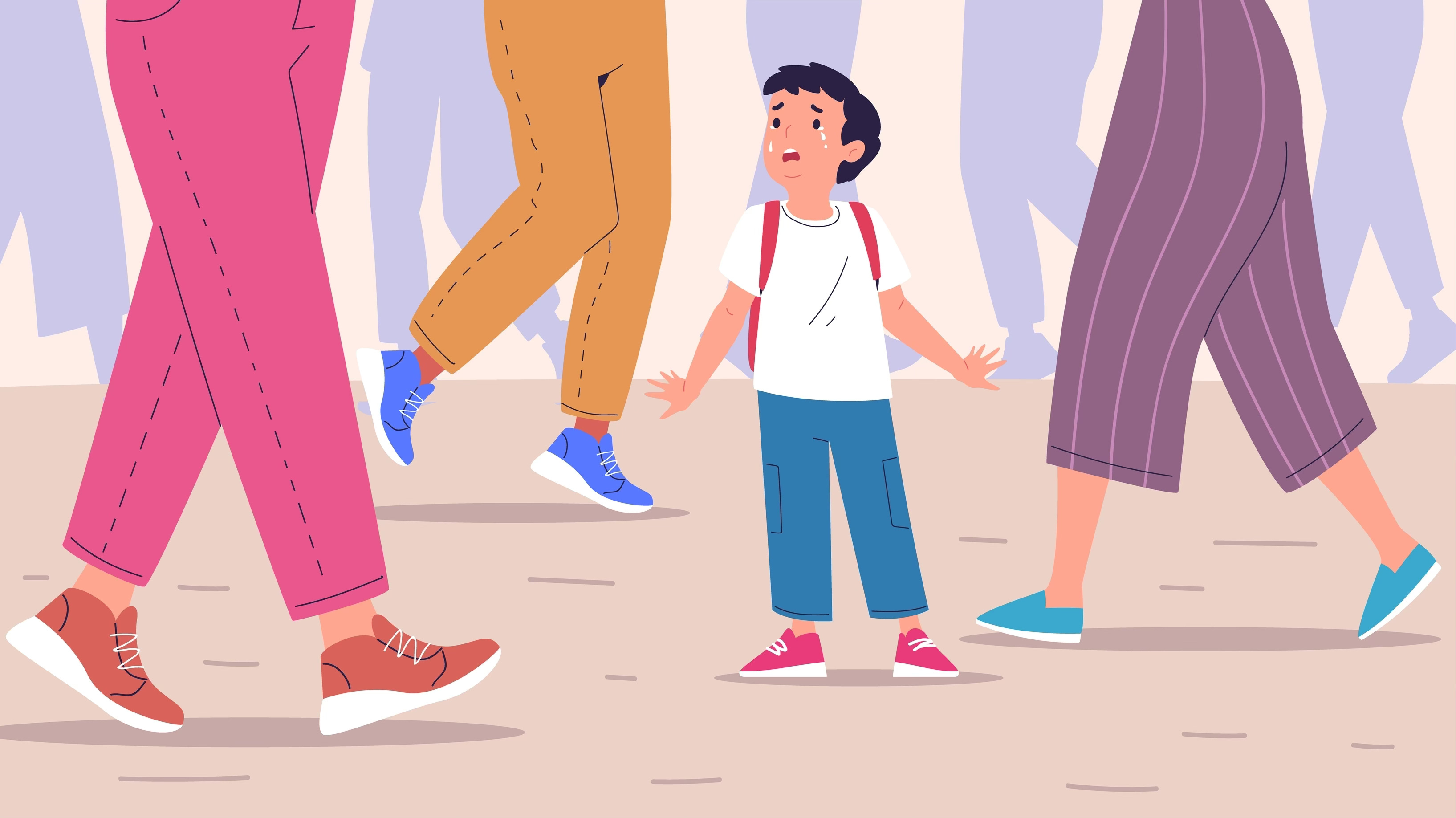
90% of Lost Children Are Found Within 30 Minutes
That statistic should both comfort you and wake you up.
Most lost children are found quickly. But the ones who aren’t? They usually made one mistake.
And here’s the uncomfortable truth:
It’s often the exact thing most parents teach them.
We tell our kids:
“If you get lost, come find me.”
It sounds logical. It sounds empowering.
It’s wrong.
The Mistake Most Lost Children Make
When children realize they’re separated, they do three things almost automatically:
They panic.
They wander.
They try to find you.
Every step makes them harder to locate.
From a search standpoint, movement creates chaos.
Parents retrace their steps.
Security scans zones.
Staff lock down areas.
Search works best when movement stops.
When a child keeps walking, they move outside the original search radius. Helpers are looking where they were last seen — not where they’ve wandered.
Stillness increases probability.
Movement expands the problem.
The first lesson is not “go find me.”
It’s this:
Stop. Stay. Yell.
Why Stillness Wins
Think like a search team.
If a child stays put:
Parents can retrace steps.
Security can scan systematically.
Helpers converge to one fixed location.
The search radius remains small.
If a child keeps moving:
The search area expands.
Adults pass each other.
Missed connections multiply.
Minutes stretch into hours.
Stillness keeps the math on your side.
Teach Them Who to Approach
The second mistake we make as parents?
We say, “Find an adult.”
Not any adult. Not the nearest stranger. Children need a filter.
Teach them to look for, if at all possible:
A mother with children.
Caregivers who already have kids with them are statistically among the safest people to approach in public settings. They are visible, stationary, and more likely to engage quickly.
It’s a clear, concrete instruction.
Children don’t process vague categories like “safe adult.”
They process visuals.
“Find a mom with kids” is visual.
A Phone Only Helps If the Number Is Known
We often assume phones solve everything.
They don’t — unless your child can use one. Even young children can memorize a 10-digit phone number with repetition.
But you must train it.
Practice it like a song.
Sing it in the car.
Chant it at bedtime.
Turn it into rhythm.
Repetition becomes recall.
In an emergency, recall matters more than theory.
The Code Word Rule
One more layer of protection.
Choose a private family code word.
Something only your household knows.
If someone approaches and says:
“Your mom sent me.”
Your child asks:
“What’s the code word?”
No word.
No go.
This simple rule eliminates manipulation attempts instantly.
It gives your child agency without requiring them to evaluate character.
Real Safety Is Training — Not Luck
We don’t get safer by hoping.
We get safer by practicing.
Teach:
• Phone number
• Code word
• Stop, stay, yell
• Find a mom with kids
Multiple skills.
Simple instructions.
Clear visuals.
Five minutes of training can replace hours of panic. This isn’t about fear. It’s about preparation.
Because when a child gets separated, the clock starts.
And what they do in the first minute determines what the next thirty look like.
That’s real protection.
My daughter-in-law suggested:
“calling out what your child is wearing is helpful Ex not just “Robert”, but “Robert”- boy with blue pants white shirt”, to get others looking too.
This is awesome information.